
'When you look at reviving private sector capex, I don't think there's a better story than steel.'

'The Budget will be positive, continuing on the path of growth taken so far.'

Technology giant Apple Inc has pushed the pedal on exporting iPhones from India by racking up exports valued at over $2 billion in the first two months of the current financial year (FY25), according to the data provided by vendors to the government. This accounts for 81 per cent of the country's total production of iPhones worth $2.6 billion. In May, Apple repeated its performance of April and once again crossed $1 billion of iPhone exports.

The welfare schemes of the government, particularly Lakshmir Bhandar, have had a major impact on the electoral outcome.

'Women are likely to have voted because of the numerous welfare schemes. The CAA consolidated minority votes and the BJP's booth-level organisation in Bengal is weak.'

Godfrey Phillips executive director Samir Modi has lodged an FIR in New Delhi's Sarita Vihar police station, alleging that her mother Bina Modi and Lalit Bhasin, one of the company's board members, orchestrated an assault on him during the board meeting. It further exacerbated the ongoing feud among the late KK Modi's family members over the distribution of the Rs 12,000 crore inheritance. Bina is also the director of Godfrey Phillips.
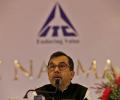
Three leading domestic voting advisory firms are not on the same page over the proposed demerger and separate listing of ITC's hotel business, ITC Hotels. Institutional Investor Advisory Services (IiAS) has recommended a vote "against" the resolution, while InGovern and Stakeholders Empowerment Services (SES) have advised their clients to vote in favour. Voting on the resolution is currently underway.

'The life of his political career is dependent on success in this constituency.'
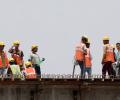
Several firms are stepping up to help their workforce cope with soaring temperatures

Plug-in hybrids have two engines and the electric part has a much larger battery than in the regular hybrids. Car companies, led by the Japanese, are pushing the Indian government to look at hybrids in the interim if it wants to reduce carbon emission.

The curious onlookers that greet the candidates are, however, unaware about the importance of history. They are just there to catch a glimpse of 'Rani Ma' Amrita Roy or Mahua Moitra.

Mumbai-based Weizmann, part of a diversified group, will take to court its former partner Western Union Holdings, the American money-transfer giant, alleging that the United States-based company has imitated its trademark and logo. This, its lawyers say, constitutes a case of infringement and dilution of its intellectual-property rights.

Venture capital (VC) and private equity (PE) funding for Indian startups in the artificial intelligence sector has seen a dramatic decrease with deal sizes shrinking, notwithstanding the buzz around the country's potential as a major AI hub. Data from research agency Traxcn, which tracks PE/VC investments, shows that total funding for AI startups in India, which started with a bang in 2022 at $599 million, dropped sharply in 2023 to $168.4 million - a decrease of over 71 per cent.

Finnish phone manufacturer Human Mobile Devices (HMD Global), which acquired the Nokia brand name from Microsoft, is planning to make India a key manufacturing hub for its phone exports. The company only began exporting late last year with the Nokia 105 Classic. What started mainly with feature phones will now extend to smartphones - it announced the global launch of models under the HMD brand for the first time a few days ago and these will be available in India too.

The top six auto brands are: Maruti Suzuki, Hyundai, Tata Motors, Toyota, Kia and Mahindra & Mahindra.

The alpona (artwork) on the steep, winding road leading to Makaibari bears testimony to the visit of G20 delegates for the second tourism working group meeting in April last year. The lush tea bushes, the delegates joining in for the moonlight plucking of Silver Tips Imperial first flush, a favourite of late Queen Elizabeth II, cut a picture of mystical magic. But it's not the Kurseong tea garden's only shining moment - the last few years have been busy for the estate and its bungalow.

Semiconductor makers need thousands of engineers and technicians, and though India has one of the largest pool of engineers in the world, they do not have experience in the semiconductor manufacturing space.

'Companies like Tesla and others have been given a long rope in India.'
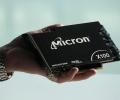
Micron Technology, a global leader in memory and storage, is considering supplying Made-in-India chips from its Gujarat plant to one of its key global clients, Apple, whose vendors assemble iPhones in the country. Micron is setting up an assembly test marking and packaging (ATMP) plant in Sanand, Gujarat. Currently, Apple vendors import chips for manufacturing iPhones. Sources in the know say the aim is to use part of the production to supply to Micron's clients in India directly.

The political heat in West Bengal has been giving the rising mercury levels serious competition since the high court order.
 © 2026 Rediff.com - Advertise with us - Disclaimer - Privacy Policy - Sitemap - Feedback - About us - Terms of use - Grievances